Pune: Vijayadashami Floral Market Faces Shortage as Farmers Battle Rain and Low Prices
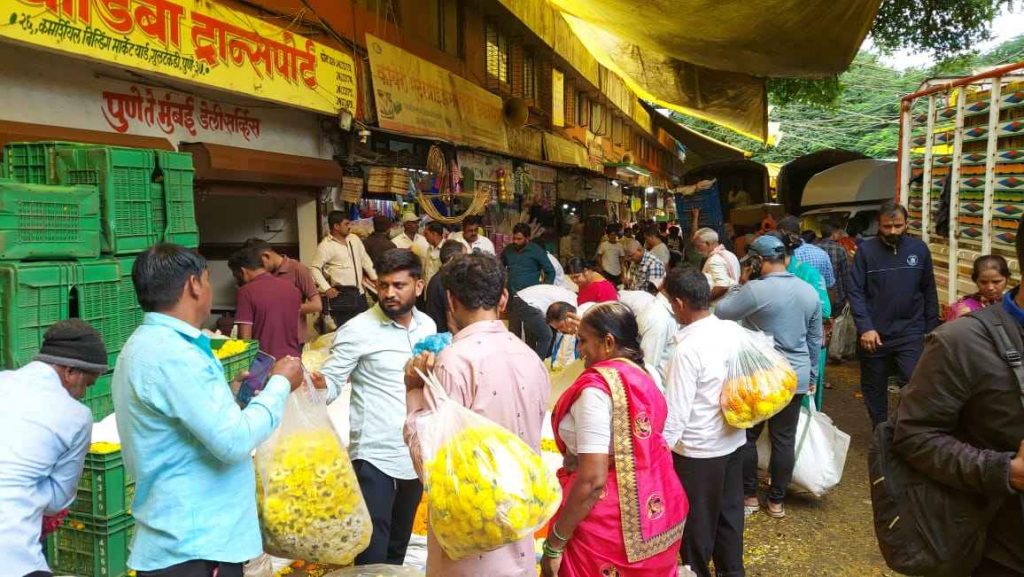
Market Yard, 1st October 2025: On the occasion of Vijayadashami, one of the auspicious Muhurtas celebrated across Maharashtra, the Gultekdi Market Yard in Pune saw the arrival of marigold flowers from across the state. However, this year, farmers faced a double blow—scarce supply due to heavy rains and low market prices that barely cover costs.
Despite wading through waist-deep water to harvest their crops, farmers are receiving only Rs 50 to Rs 60 per marigold flower. Typically, Vijayadashami draws large volumes of flowers to Pune’s wholesale markets, but the excessive rains in Marathwada and other regions have caused significant losses, reducing the number of flowers reaching the city.
Marigold varieties such as yellow and orange are being sold at Rs 50 to Rs 80 per kilogram, depending on quality. Premium marigolds fetch around Rs 100, while Shevanti flowers are priced between Rs 90 and Rs 140. However, rain-damaged flowers are selling for as low as Rs 20, leaving farmers struggling to make ends meet.
A farmer from Karmala shared his plight, “I had planted marigold flowers on two acres, but heavy rains destroyed most of the crop. I managed to bring four tons of flowers through knee-deep water and arrived in Pune by train at midnight. Even now, I am getting only Rs 50 per kilogram. People are not buying. We appeal to the Chief Minister to declare a wet drought and provide immediate relief to farmers.”
Traders at Gultekdi Market Yard confirmed the grim situation. “Every year, the Vijayadashami season sees a massive influx of marigold flowers,” said one trader. “This year, more than half of the flowers have been damaged due to rains. The few good flowers are priced between Rs 70 and Rs 100, while damaged flowers start at Rs 20.”
As families prepare for festive decorations and rituals, the rains have left farmers facing both natural and economic hardships, highlighting the urgent need for support and intervention to sustain floral cultivation in the state.