How Global Automotive Brands Have Shaped the Way Indians Buy Cars
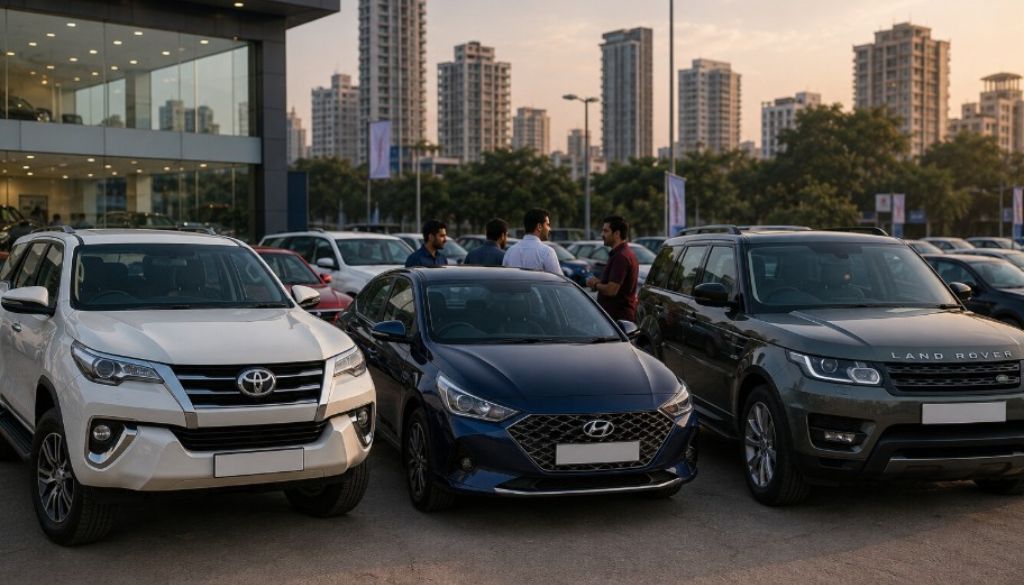
Pune, 25 June 2026: There was a time when buying a car in India meant choosing between three or four names, mostly domestic. The Maruti 800, the Ambassador, and maybe a Premier Padmini if someone wanted a bit of flair. That world? Gone.
Global automotive brands entering India over the past three decades haven’t just added more options to showroom floors. They’ve fundamentally altered what Indian buyers expect, how they research, and what they prioritise when spending their money.
When safety became a selling point
Before global brands pushed into the Indian market, safety was rarely part of the conversation. Airbags were exotic. Crumple zones were engineering jargon nobody discussed over chai.
European and Japanese manufacturers changed that by introducing models with safety ratings front and centre. Hyundai’s early campaigns for the i20 put build quality first – something unheard of for a compact car at the time. Honda positioned the City as a car that could protect families, not just transport them. Volkswagen brought German engineering credibility that made buyers in Delhi and Mumbai start asking pointed questions about structural rigidity and crash performance. For anyone now browsing 2nd hand cars in India, the sheer variety of brands available is itself a product of this shift – though most people don’t realise the bigger changes happening beneath the surface.
Any Chennai buyer who lived through the 2015 floods will confirm that build quality matters in ways brochures never prepare you for. The part nobody tells you? Once you’ve experienced real structural integrity during monsoon flooding, you can’t go back to thin metal and hollow doors. Just can’t.
This ripple effect pushed domestic manufacturers to up their game dramatically. Tata Motors invested heavily in Global NCAP ratings while Mahindra started marketing crash test results like they were cricket scores. The expectation of a safe car, once a luxury consideration, became a baseline demand that no manufacturer could ignore without losing market share.
How feature creep became the norm
Global brands brought features that Indian buyers had never experienced in affordable segments. Touchscreen infotainment, automatic climate control, connected car technology, and sunroofs became standard features at price points that would’ve been unthinkable a decade ago.
Most people think Kia’s entry into India with the Seltos was just good timing. Wrong. The feature list was so aggressive that it forced every competitor in the compact SUV segment to match or exceed it within a single product cycle. This created a feature arms race that benefited everyone except manufacturer profit margins.
Interesting pattern: this created ripple effects in the pre-owned market, too. Older models from global brands often hold appeal specifically because their feature sets were ahead of their time.
A five-year-old Volkswagen Polo still offers a driving experience that many newer budget cars struggle to replicate – the steering feel alone is in a different league. Buyers searching for used Volkswagen cars often cite this exact reason. The driving dynamics and interior quality from a few years ago still feel current, sometimes superior to brand-new alternatives.
The research revolution brands accidentally triggered
Perhaps the most underappreciated change global brands brought is how Indians research cars. Before international competition intensified, buying decisions were largely community-driven. Families asked neighbours. Colleagues recommended what they owned. The local mechanic had the final word.
That’s only half the story.
Global brands, with their digital-first marketing approaches, trained a generation of buyers to compare specifications online, watch video reviews, and read owner forums before stepping into a showroom. Ask any Bangalore software engineer shopping for a car, and the process involves spreadsheets comparing ground clearance, boot space, and cost-per-feature ratios across at least six models – behaviour that would’ve seemed obsessive in the 1990s but now feels standard.
What this means for the market going forward
The Indian car market is no longer a place where a single dominant player can dictate terms. Period.
Global brands have trained buyers to expect more at every price point, and that expectation doesn’t reset when someone buys their second or third car. Ownership costs, resale value, and after-sales service networks now weigh as heavily as the purchase price – a calculation that required buyers to become amateur analysts of the total cost of ownership.
The competition has also pushed Indian manufacturers to meet international standards. Tata and Mahindra now export vehicles that compete globally, something that would’ve seemed unlikely in the early 2000s. Global brands didn’t just sell cars in India – they raised the floor for everyone. Domestic manufacturers had to meet international standards or lose market share to imports.
Indian buyers are the clear winners in that equation. The cars available today, whether fresh from a showroom or a few years into their life, reflect standards that simply didn’t exist a generation ago.