Pune’s Deccan College Launches Bharat-Vidya to Integrate Indian Knowledge Systems with Modern Education
Reported by Mubarak Ansari
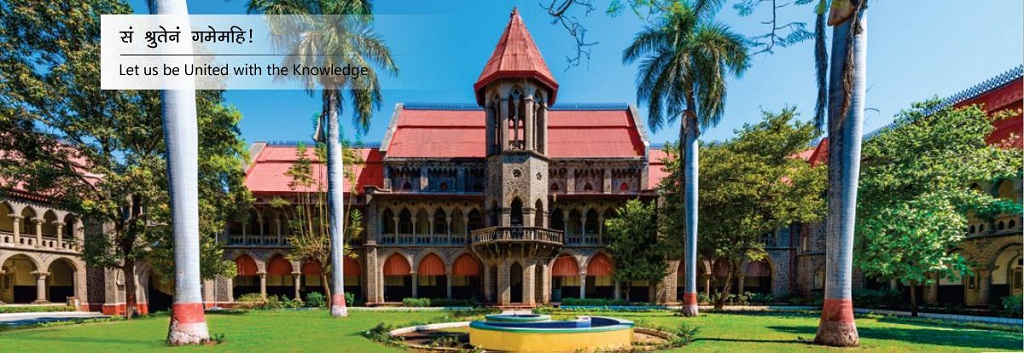
Pune, 14th July 2026: Deccan College Post Graduate and Research Institute (Deemed to be University), established in 1821, has announced a series of major academic and institutional initiatives, including the launch of a five-year integrated programme titled Bharat-Vidya and a long-term Vision 2047 roadmap aimed at securing the status of an Institute of National Importance.
The announcements were made during a press conference addressed by Chancellor Prof. Bhushan Patwardhan, Pro VC Dr Prasad Joshi and senior academicians at the Department of Ancient Indian History, Culture and Archaeology (AIHC&A) on Tuesday.
“Our vision is to build on Deccan College’s established scholarship and transform it into an Institution of National Importance for Humanities, Civilisational and Human Studies, emerging as a global centre of excellence in research and education,” Chancellor Prof. Bhushan Patwardhan said.
Five-Year Integrated Bharat-Vidya Programme
The newly introduced Bharat-Vidya programme is a five-year integrated course in transdisciplinary studies that combines Indian Knowledge Systems (IKS) with global academic traditions, including Western scholarship. According to the institute, the curriculum has been designed to integrate Indian knowledge into humanities, civilisational and human studies while aligning with the national vision of Viksit Bharat. Only 20 students will be admitted for the course.
Structured in accordance with the National Education Policy (NEP) 2020, the programme offers multiple exit options, including an undergraduate degree after 120 credits, an undergraduate honours degree after 160 credits and a postgraduate degree after 200 credits.
The first two years will provide a common interdisciplinary foundation covering civilisational studies, philosophy, classical languages, ecology, governance, ethics, science and the arts. The third year will focus on specialised skills, while the final two years will emphasise advanced research, internships and original academic work.
Students can specialise in one of five academic tracks:
Archaeology
Heritage Sciences
Ancient Indian History and Culture
Sanskrit and Linguistics
Temple Architecture, Iconography and Heritage Management
Admissions are scheduled to begin next week. The first batch will comprise a select group of highly motivated students who will also contribute to refining the curriculum before it is introduced at other institutions. Candidates who have completed Class 12 will be eligible as per UGC norms, and scholarships will be available for deserving students.
ABHA Maharashtra to Promote Transdisciplinary Education
Deccan College also announced that Bharat-Vidya will serve as the academic foundation of ABHA Maharashtra (Alliance of Bharatiya Academia for Transdisciplinary Education), an academic cluster and knowledge hub envisioned under NEP 2020.
The institute will anchor the alliance, with five partner universities from Mumbai, Pune, Chhatrapati Sambhajinagar, Nagpur and SNDT expected to join the founding network. Deccan College will lead curriculum development and faculty preparation during the first year before expanding the initiative nationally under ABHA National.
Faculty Development Proposal Submitted
To support the new programme, Deccan College has proposed a statewide Faculty Development Programme in collaboration with the Maharashtra State Faculty Development Academy (MSFDA). A proposal seeking a Rs 10 crore seed grant and designating MSFDA as the implementing agency has been submitted to the Maharashtra government.
Vision 2047 Targets Institute of National Importance Status
As part of its long-term development strategy, Deccan College is preparing a comprehensive Vision 2047 Development Plan covering academic, infrastructure and governance reforms.
The institute has constituted a Vision Committee, a Vision Consultative Group and an Independent Peer Review Committee to guide the process. The peer review panel, chaired by Prof. Amba Kulkarni of IIT Hyderabad, has already held its first meeting and is expected to conduct an institutional review in August 2026.
The Vision 2047 roadmap will seek recognition from the Central Government as an Institute of National Importance for Humanities, Human Sciences and Heritage Studies, following models adopted by premier institutions such as IISc, TIFR and JNCASR.
Initially, the proposal will focus on strengthening disciplines including Sanskrit, linguistics, anthropology and heritage studies.
Heritage Conservation and Academic Expansion
The development plan also includes the conservation of Deccan College’s historic nineteenth-century campus in Yerawada. The institute plans to further strengthen its existing AIHC departments and Heritage Sciences cluster while introducing new disciplines to establish itself as a global centre of excellence in humanities, civilisational and human studies.
Deccan College also highlighted its academic legacy, noting that it houses the Centre of Advanced Study in Ancient Indian History, Culture and Archaeology, India’s oldest Department of Linguistics, and the Encyclopaedic Dictionary of Sanskrit on Historical Principles, now accessible through the KoshaSHRI portal.